Hosting High Value Partner and Client Events: Perceived Value Worthy of a $1K ticket?
Is Attending Your Event an Obvious YES for Guests?
The ROI ceiling of a client or partner event is locked in before anyone walks through the door. The key moment is when your most important clients and partners look at the invitation and decide it's a definitive YES.
That decision (yes, no, or "let me see how the week looks") is the one that every other value measure will cascade from. Everything you're investing in (the venue, the food, the program, the evening itself) only works on the people who show up. And for the people you most want in the room, showing up is never automatic. Based on our experience post-Covid, 50%+ of people who RSVP yes won't actually attend and up to a quarter of people who paid for a nominal ticket ultimately won't make it.
Your high title large company executive invitee gets invited to everything. They're choosing between your event and three others this week vs dinner with their family vs finishing a project ahead of an early flight tomorrow. "Client appreciation dinner" sounds like something they could send to a more junior team member. A definitive yes comes with the expectation that the evening will be worth their time: that the people will be at their level (or above or uniquely interesting) and worth talking to, the experience will be memorable, and they'll stay out of interest and not obligation.
Sometimes what wins is simply who sends the invite and who else is in the room. When I was leading an X PRIZE Foundation initiative, the names of key chairs and confirmed attendees became the most compelling element of every invitation we sent. Knowing that a specific foundation leader or industry figure would be there changed the calculus for the next person we needed to secure. The guest list built its own momentum, each confirmed name making the next yes easier to get. The same dynamic plays out in client engagement: if your most respected client is attending, that fact alone can move a prospect from "maybe" to "yes." The room itself becomes the draw. If someone external can help, a celebrity author or speaker or performance can tip the answer from not sure to not possible to miss.
Which means the most important design question for a client event doesn't start with ideas for what happens during the evening. It's what makes the right people excited and definitively certain they want to be there. The answer has two sides. For the guest, it's the expectation of a memorable experience, an evening worth their time that they'll recall and talk about. For the host, it's the shared moments that happen between people when the evening is good enough to keep them in the room: The conversations that build trust. The discovery of a shared hobby or interest. The personal connections that no email or conference room conversation can create.
Location, Location, Location
One of the biggest factors in whether your key clients attend starts with how hard it is to get there and back.
Convention Offsite
A low friction location removes that barrier. A classic approach is to rent a nice venue near a conference, convention, industry meeting or other event. Sponsored offsites take advantage of a critical mass of the industry all in one place at one time and often with many coming from out of the area specifically looking to engage with other people in the industry. Our landmark venue, 440 Elm offers this type of location with 20K sq. ft of premium historic event space near the Long Beach Convention Center or the upcoming Olympics coastal zone. Access via shuttle buses or Uber codes and outreach or word of mouth that speaks to the quality of the event in a nice venue can make it simple for attendees to lock in the decision to attend your event.
Their Office
Another approach that is a bit underutilized for high end events is to bring your event to a client office or industry hub. Agencies, law firms, tech firms, architects, fashion houses, all tend to be co-located in industry specific clusters. Bringing an event to the hub can reduce the time in transit to your event and increase the quality of people who will be able to stop by, given the lack of friction and likelihood of being able to see a cluster of people at the same time. You may want to engage the full base of people or invite a clear subset with + invitations and potentially a VIP area. As an example, we catered some of Pinterest's agency presentations in some of the more popular agency hubs and offices in Los Angeles as they were introducing some new technology to media buyers. The onsite location required a bit of targeting to get the right attendees, but it was frictionless to have them come down from the office to get a tour of the capabilities over some bites, enjoy a quick presentation providing an overview of the rollout, and then chat with experts and sales-supporting engineers to answer questions over some hot cocoa and flamed s'mores bites.
Your Office
You office can flip the value proposition from their office in terms of generating deep connections and differentiated capabilities assessments against the trade-off of more travel friction. An office visit allows clients and partners to meet more of your people, see any specialized capabilities or inventory, walk the floor, and potentially experience for themselves some of the magic of your operation if anything is visually easy to consume (size, scale, specialty equipment, cool demonstrations, brilliant people, etc).
Event Venue
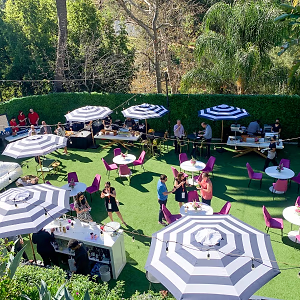
The selection of the venue is a good indicator of the quality of the experience. A box at SoFi or Crypto is a 1:1 or small group game or concert experience. A BYO drink at a bar is a casual mingling experience. A restaurant buyout could be a presentation and small group dining experience. A hotel or country club can offer a group experience with specified rooms and menus. A high end specialty venue (a la 440 Elm, Hollywood Palladium, Greystone Mansion, Paramour Estate, the United Theater) is an exclusive takeover experience with generally a more unique F&B program and ambiance in what can be a completely private setting.
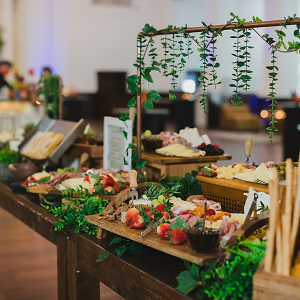
Each of these choices changes the likelihood of attendance from your most important guests. And each one creates a different set of requirements for the food and hospitality experience, ranging from the very casual to a multi-course dinner in a private dining room to a full-service reception built from scratch in a corporate lobby that wasn't designed for it. The location strategy and the catering strategy go hand in hand and are a signal that helps an invitee determine if they should attend and who they should send.
Early Impressions
Now that they've decided to attend and show up, the initial experience drives decisions to stay and participate vs. get frustrated and decide to leave. Lines drive the initial impression of the event if its not part of a shuttled-in program as part of a meeting or an event for people already in-office:
- Is the valet or drop-off smooth? Or is the valet overwhelmed? Or parking guy blocking 25 waiting cars as if he's never seen an event with a start time?
- Can I find where I'm supposed to go? Are there signs or someone directing? Or do I have to figure out the maze of which room my event is in?
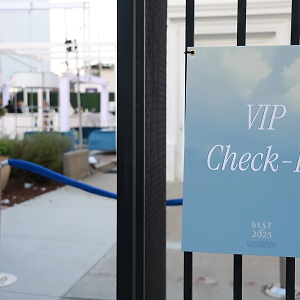
- Is there a long queue to check in? Or can I quickly walk up and get cleared/ a name tag or whatever?
- Can I use the restroom to freshen up? Or do I need to stand in line and wait?
- Is there a bite to eat and a ready first drink? Or are there a mass of people and a line for the bar?
The Room Where it Happens
Now that you've got your people and clients and partners in the room together, it's time to make the magic happen. The type and expectations around programming and experiences start to create a differentiated experience. Is this an intentional gathering with a program? A curated group of people with a design encouraging collisions? A thank you for attendees with a memorable celebrity experience? Intention begets impact. Run that intention through the elements of the program...its too easy to check boxes and realize after the fact that you threw the networking event where the DJ or band prevents conversations or the mixer where unclear social dynamics and attendees lead to sr people seeking out cliques for protection or hiding in back rooms rather than elevating the impact of the gathering.
From an ROI perspective, the design of the event for the senior attendees of the key accounts is where you find 10X+ differences in return. These are the people who sign off on proposals, green light ambitious projects, and provide air cover for bumps along the way. We believe that they could be a source of much greater value than most client/ partner events capture. A few thoughts on creating a room where that value can be captured:
Craft intentional collisions
Senior people love meeting interesting people. Rather than hoping that this happens through happenstance, pre-designed collisions can help to create that memorable meeting moment. Traditionally it's the set-aside of a VIP area, but that can backfire as it often re-creates the known clique dynamic. More conscious host-mediated connections, including select non-VIP guests coming in or VIPs moving to an intermediate area, can energize the section in an easier to execute way. More interesting approaches involve private 2-5 person experiences within an event - a private whisky tasting or behind the scenes tour. Curating the invitations to those groups is a high alpha task often dropped for convenience.
Create expectations for great conversations
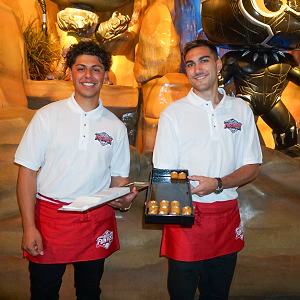
I went to a founders retreat where the host made two requests: 1) leave a space in each conversation circle so someone can join (the Pac-Man), and 2) if you join that conversation the only words out of your mouth for the first few minutes should be "Please continue". Woven in with the code of conduct was the expectation to go forth and meet people and jump in and out of conversations as interest dictates. Even more intentional was the application to attend the event which led to a curated group of people with the ability to articulate interests rather than a focus on an in-person version of cold email spam. Those degrees of control may not be fully possible with a client or partner event that happens once, but adding expectations to invite lists can shape the frame of the conversation. On the ground, put food and beverage stations near places where it's easy to talk and assign your own senior people to take turns being the host in those areas. Have the caterer inject interesting passed appetizers (I personally love our steakhouse bite with wagyu and a smoked cloche) or popular energetic drinks like an espresso martini to make spaces designed for conversation (with appropriate background noise or hallway track feel) allow conversations to continue through different parts of the program.
Highlight interesting things worth discussing
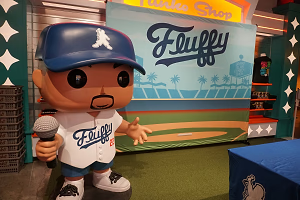
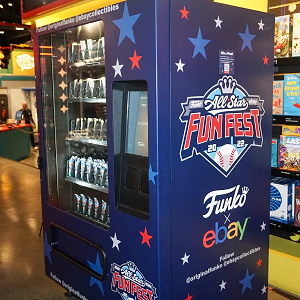
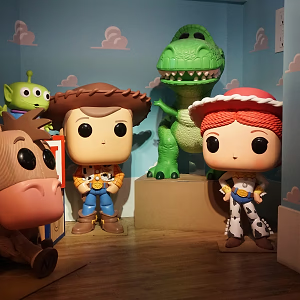
Social media and memes have highlighted that messages made contagious are more likely to spread. In this cauldron of people interested and invested in your success, are you creating messages that are easy for them to get excited about and share? Embedding elements that signal creativity, investment, key strategic choices, customer avatars, and other more creative formats throughout an event allow people to engage in a more interactive way with that content. We catered a MLB event at a Funko store where key people and themes were presented in bobblehead form. This created fun, picture-worthy scenes that were easy for partners to have fun with. When we catered an event for Switzerland Tourism hosting their top travel partners, we built the menu around Swiss favorites so that the food itself became part of the destination story and was transmitted through instagram as well as word of mouth.
Reshape NPS to Net Probability of Shipping
When great people from incredible organizations rally behind you, conversation between people attending a partner summit can turn into lateral partnerships, can create incredible synergies. We've catered an annual partnership summit for Minecraft, where part of the event is the official stage presentation where phones are carefully locked away and following is the reception where conversations are excited and animated and the food and decor are square. This meeting is not just about a message being broadcast to partners - it's as much about the energy each of the partners brings to creating innovative and successful collaborations or technology or stories. Getting them together for conversation is a community-building event where the sum of all that energy can be channeled across the entire ecosystem and ideas spread into collaborations across multiple organizations. Does that energy and interaction between the people invited occur at your events?
Attendees can tell if you see events as catalysts of incredible potential vs a forum bound by limited imagination, a limited budget, an itinerary, and a checklist. Which do you think they're excited to contribute and return to?
Would Your Clients Pay $1K to Attend?
Ultimately, a high performance client and partner event takes advantage of that magical energy that only happens in person and leverages the right people and the right setting to bring amazing things into existence. While we see most events start with an obligation and a budget, the very best ones start with an aspiration and a target for value creation for everyone involved. I raise the $1K threshold because it's often what you're asking for in time (and potentially even more with travel) from a partner or client executive, so it is the price being paid. If your organization consciously seeks a floor of a $10K perceived attendance value from showing up (for large organizations you may think more broadly about meaningful improvements in a $10M or more program), then value creation will be immense, relationship development will be assured, and you will most likely see your share accrue as the convening host if the design was as intentional as the rest indicates.
If you have one of those events and need the support of like minds, or if you want some help thinking through one of your events to help it capture its potential, schedule some time with us.
Photo Gallery

Vijay Goel, MD, is co-owner of Bite Catering Couture, a catering company focused on thoughtful design and beautiful presentation of meaningful events in Los Angeles, and 440 Elm, a historic 1913 landmark venue in Long Beach. A former physician and McKinsey consultant, Vijay served as a Prize Lead at the XPRIZE Foundation before joining the events industry. He speaks on event strategy and business at Catersource, WeddingMBA, and the BeSage Conference.
By: -- Mar 21, 2026